
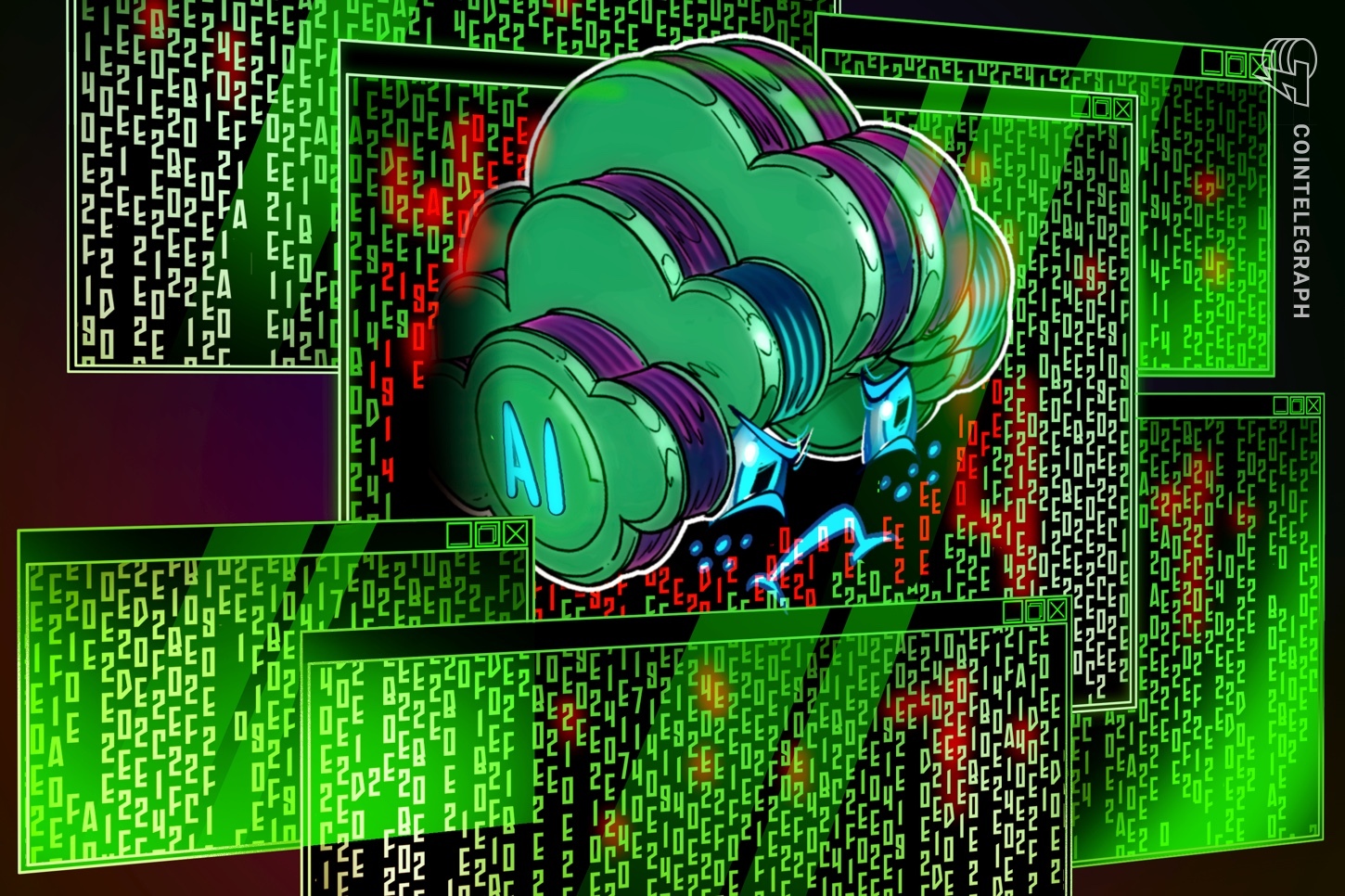
Drake Calls for Crypto Industry to Enter 'Bunker Mode'
Justin Drake, a well-known Ethereum researcher, has issued an urgent call for the broader cryptocurrency community to prepare for what he describes as a potential near-term threat to the cryptographic foundations of today's blockchains. In a post on X published on Wednesday, Drake advised users to begin relocating their holdings to newly generated wallet addresses, warning that breakthroughs in artificial intelligence could erode the security guarantees of the elliptic curve digital signature algorithm (ECDSA) far earlier than previously expected.
"We should now reasonably prepare for the scenario in which ECDSA is compromised before the arrival of quantum computing day — and in the worst-case scenario, this could happen in a matter of months rather than years," Drake stated.
His warning carries significant weight because it shifts the anticipated timeline for cryptographic vulnerability from the distant future of quantum computing to the present era of AI-assisted mathematics. If AI systems can derive private keys from publicly exposed keys, the entire security model underpinning most current blockchain wallets could be at risk within a very short window.
AI Breaks in Mathematics Rattle Long-Standing Assumptions
Drake's alarm was triggered by a series of recent developments from OpenAI. On Tuesday, the company published hundreds of newly discovered mathematical results spanning several disciplines, including algebra, theoretical computer science, and mathematical logic. Just one month earlier, OpenAI announced that a coordinated team of 10,000 autonomous AI agents, operating in parallel, managed to solve the Navier-Stokes equation — a problem that has resisted resolution for centuries and is considered one of the most formidable challenges at the intersection of mathematics and physics — in a mere 88 hours.
The Ethereum researcher acknowledged the unsettling pace of these advances. "The past several days have been a humbling experience for human mathematical intuition. Hypotheses that were long taken for granted without question have now been dismantled," he noted.
Drake further explained why elliptic curve cryptography is particularly vulnerable compared to alternative schemes. He pointed out that elliptic curves possess a wealth of internal algebraic structure, opening the door to sophisticated techniques such as the Schoof algorithm, Frobenius maps, and bilinear pairings. By contrast, hash functions are deliberately engineered to suppress algebraic structure, making them less amenable to the kind of structural exploitation that AI could potentially leverage against curve-based signatures.
Recommended Steps for Protecting Wallets
Given the potential threat, Drake laid out a practical course of action. His personal recommendation is to initiate a carefully orchestrated, large-scale migration of assets to brand-new addresses. He specifically urged that larger and more technically sophisticated holders — institutions, long-term accumulators, and high-net-worth individuals — should be the first to execute this move, given the scale of their exposure.
A critical tactical detail in his guidance involves the timing of the final transfer. Drake advised that after signing any transaction from an existing address, users should immediately sweep the remaining balance to a fresh address. The reasoning is straightforward: the act of signing a transaction typically exposes the wallet's public key. A newly generated address, however, keeps the public key hidden behind a cryptographic hash until the first transaction is signed, thereby reducing the window of vulnerability to an AI-assisted key-recovery attack.
A Cautious, Gradual Approach Emphasized
Despite the urgency of his warning, Drake was careful to stress that the migration process must not be executed in a panic. He cautioned that a hasty, disorganized transfer of assets across the ecosystem could create its own set of risks — including operational errors, liquidity shocks, and confusion among retail users — that would ultimately be more damaging than the cryptographic threat itself. "A rushed migration would do more harm than good," he emphasized.
The broader implication of Drake's warning is that the crypto industry may need to accelerate its transition toward post-quantum and AI-resistant cryptographic standards well ahead of the original timelines. If AI systems continue to erode confidence in classical elliptic curve mathematics at the pace suggested by recent OpenAI results, the window for a safe, orderly migration of trillions of dollars in on-chain assets may be considerably shorter than the community has previously assumed.