
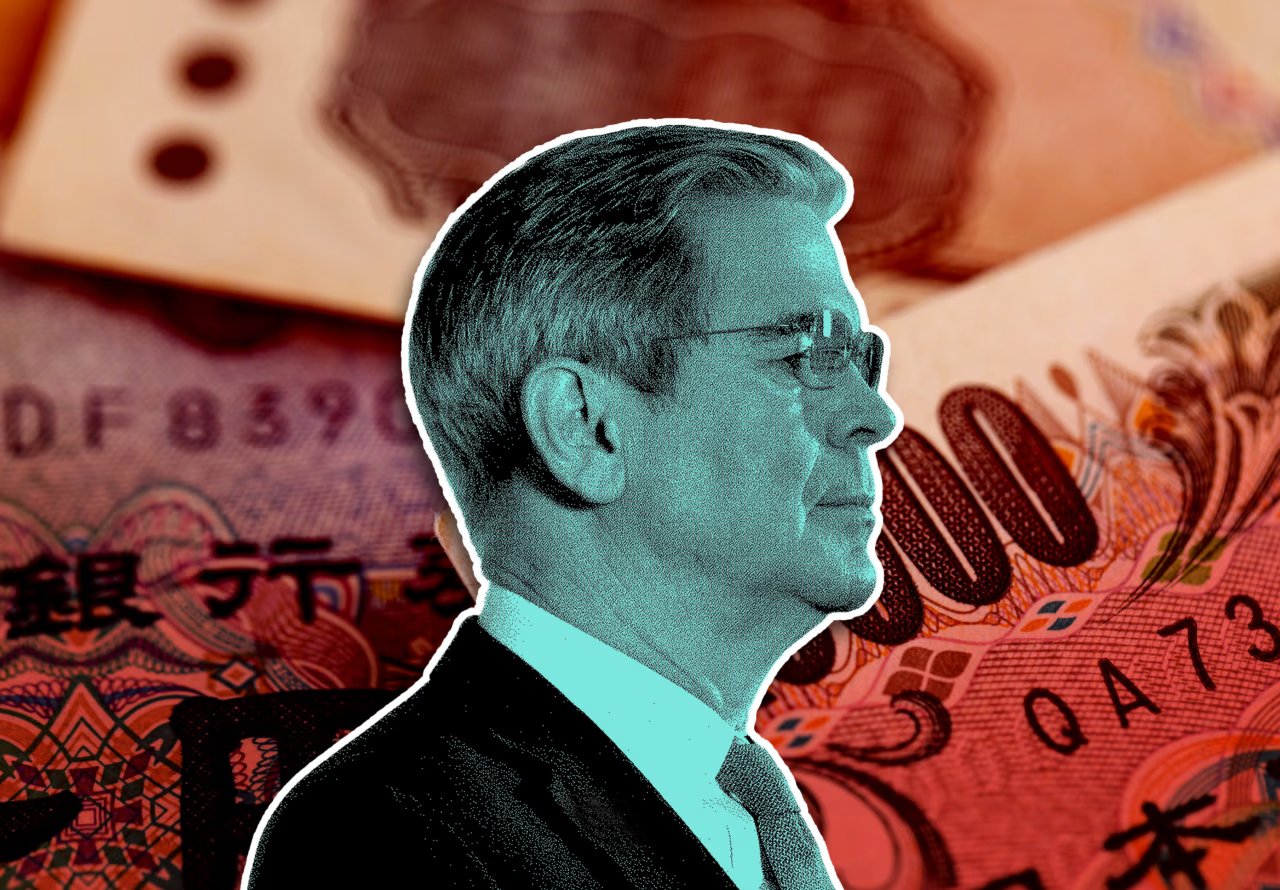
A Bold Challenge to Currency Traders
U.S. Treasury Secretary Scott Bessent has openly dared market participants to challenge his commitment to strengthening the Japanese yen, framing his position in the well-known gambling idiom: he is, in effect, the house. In a comment captured by Bloomberg Markets correspondent David Finnerty, Bessent suggested that traders who push back against his yen-supportive stance are playing against someone with a structural edge.
The remark underscores a broader shift in how Washington has positioned itself in foreign exchange markets, with the Treasury Secretary making clear that his willingness to defend the yen is not merely rhetorical. By invoking the "house" metaphor, Bessent signaled that the institutional resources and policy levers at his command give the U.S. government a decisive advantage over any individual trader or fund attempting to run counter to his objectives.
The Inside-Information Claim
Going a step further, Bessent stated that when he steps into currency markets in the current environment, he is effectively doing so armed with inside information. This is a striking assertion from a sitting Treasury Secretary, implying that the breadth of data, intelligence, and real-time market access available to the U.S. Treasury far exceeds what is publicly traded or available to private-sector participants.
The comment carries significant implications for how counterparties and institutional desks assess their risk when trading the yen against the dollar. If the Treasury can act on information that is not yet reflected in prices, the traditional assumption of a level playing field in forex markets is, in Bessent's framing, no longer applicable. Traders who position themselves against the yen on the assumption that they are trading on the same information set as the government may find themselves at a disadvantage.
Market Implications
While Bessent did not announce a specific intervention or policy measure in the remarks, the tone of his challenge suggests that the U.S. government views a weak yen as a concern warranting active engagement rather than passive observation. For forex desks and currency strategists, the message is clear: the cost of betting against the Treasury's yen-supportive posture has risen, and the information asymmetry Bessent described means the government's moves may come without the usual advance signals that traders rely on to anticipate official sector activity in the FX market.